














“Bro-science” has long claimed animal proteins are essential for serious gains. This idea resonates when you consider that beef, chicken, and eggs serve up a rich protein source and amino acid profile often viewed as superior to what you get from plant-based options like beans. Consequently, many assume that depending mainly on plants could lead to lackluster results.
Recent research, however, reveals a surprising perspective. You can forego steak and whey without sacrificing muscle gains. This serves as a reassuring message for those adopting plant-based diets, proving that fitness goals can be achieved without compromise.
A recent trial published in Medicine & Science in Sports & Exercise sheds light on this notion. The study enrolled 40 young adults who were randomized into either a vegan or omnivore diet. Each participant engaged in three weightlifting sessions spaced over nine days, and crucially, researchers provided all meals. Both groups consumed approximately 1.1 to 1.2 grams of protein per kilogram of body weight daily.
Providing all meals enhances accuracy since it eliminates reliance on self-reported intakes, which can often be misleading. At the study’s conclusion, scientists biopsied the participants’ muscles to measure protein synthesis rates. Astonishingly, the anabolic reactions to animal versus plant dietary patterns were found to be similar, with equivalent myofibrillar protein synthesis rates.
This contradicts the entrenched belief in animal protein’s superiority for muscle growth. The researchers pointed out that resistance training could have amplified the anabolic effects across both diets, potentially leveling any perceived quality differences between animal and plant proteins in trained individuals.
Historically, skepticism towards plant protein stemmed from earlier studies focusing on a single meal or protein source (like whey versus pea) over a limited timeframe. More thorough studies, like this one, evaluate complete dietary patterns over an extended period.
Moreover, the researchers examined whether the timing of protein consumption impacted muscle protein synthesis. Half of the participants received their protein in three uneven meals (10%, 30%, and 60% of daily intake), while the other half distributed it evenly across five meals (20% each). The results showed no marked difference in muscle-building rates between these methods. In essence, whether one consumed animal or plant proteins, and regardless of timing, muscle protein synthesis occurred at comparable rates.
The study also assessed psychological well-being, finding that those consuming omnivorous diets often reported greater feelings of happiness. In contrast, plant-based participants noted higher energy levels and reduced tiredness.
Despite these insights, it’s crucial to recognize that the study was relatively short (nine days). Thus, long-term implications remain uncertain. While the findings are promising, they did not measure actual muscle growth or strength changes. Future research should monitor muscle and strength alterations over several weeks, encompassing a broader age demographic.
Key Takeaways from This Research
You can effectively build muscle on a plant-dominated diet, provided you consume adequate protein. This study suggests that about 1.2 grams per kilogram of body weight can stimulate muscle growth, but other evidence indicates that up to 1.6 grams may yield superior results, particularly as we age when anabolic responses to amino acids diminish.
We shouldn’t overly concern ourselves with some plants having less optimal amino acid profiles than animal sources, as long as a variety of plant proteins are consumed during the day to meet total protein requirements.
The precise timing and distribution of protein intake appear less critical for muscle-building than previously thought. Even if you took in 80% of your protein in one meal, as long as your overall dietary pattern ensures sufficient protein intake, you would still be on track.
Engaging in exercise, particularly resistance training, seems to enhance the body’s capability to utilize plant-based protein effectively, minimizing differences between animal and plant sources. In a sedentary individual, animal protein may maintain lean body mass more effectively, but simply consuming protein without consistent muscle engagement won’t lead to muscle gain.

Protein-Packed Plant-Based Power
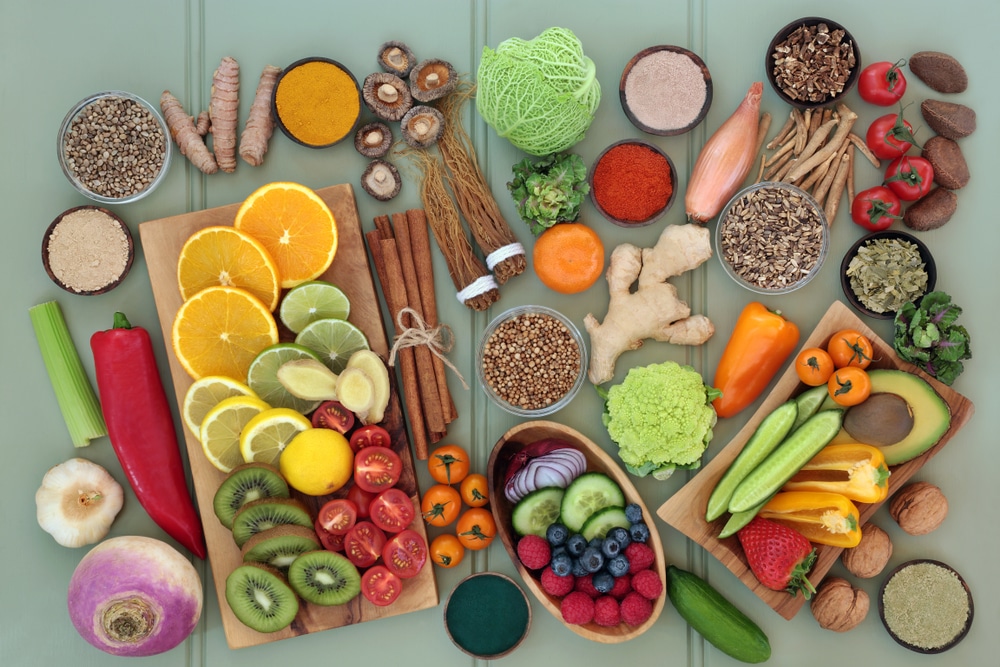
In general, meat is denser in protein, meaning you may need to consume significantly more calories to obtain the same amount of protein from plants. To primarily rely on plant-based options, incorporate foods that offer higher protein content with fewer calories. This balance allows for obtaining all essential amino acids necessary for maximizing muscle growth without exceeding calorie limits. After all, there’s only so much beans one can consume.
Consider these plant-based foods that can help achieve 0.72 grams of protein per pound of body weight, which is widely acknowledged as optimal for training adaptations. For a 180-pound individual, this translates to about 130 grams of protein.
- ½ block of tofu (25 grams)
- 3 tbsp of hemp seeds (10 grams)
- 1 cup of soy milk (8 grams)
- 3 oz of tempeh (18 grams)
- 1 cup of chickpeas (15 grams)
- 2 scoops of plant protein powder (30 grams)
- 2 tbsp of peanut butter (7 grams)
- 1 cup of quinoa (8 grams)
- 1/2 cup of green peas (4 grams)
- 1/4 cup of almonds (8 grams)