















Many individuals have attempted meditation only to abandon the practice within a week. The underlying issue is rarely a lack of personal discipline. Attempting to remain completely still while a smartphone buzzes nearby is rarely relaxing, and the directive to “clear your mind” offers little practical guidance for a brain actively processing daily tasks.
Engaging in a hands-on hobby offers a more practical approach to unwinding. By giving your fingers a simple, repetitive task, you provide a clear focal point for your attention. The following sections examine the mechanics of this process, review what current research indicates about crafting and stress, and outline how to begin a 20-minute evening session using punch needle embroidery as a practical example.
Why Engaging Your Hands Soothes an Active Mind
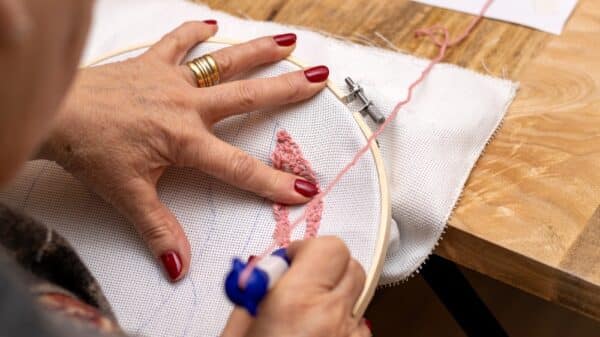
Repetitive, low-pressure movements give your attention a steady place to rest. Instead of attempting to suppress stray thoughts, you simply follow a sequence of yarn moving through fabric, leaving less space for worry to accumulate. Activities like knitting, coloring, and woodworking function similarly, while punch needle crafting remains particularly accessible.
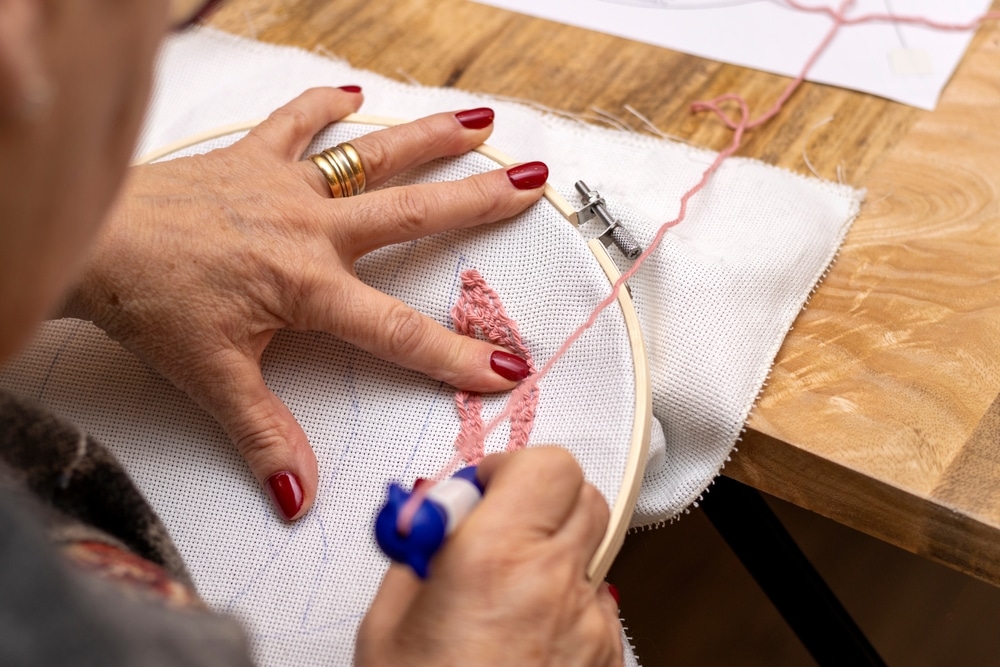
This technique employs a specialized hollow needle that guides yarn through fabric in a continuous, even motion. Errors can be undone in seconds by simply pulling the yarn back out, meaning mistakes carry virtually no penalty. Furthermore, noticeable progress often occurs within the first hour—an important factor for consistency, as hobbies that offer rapid visual feedback are naturally easier to maintain.
Novices often hesitate during the initial planning phase. Pre-assembled kits provide the printed design directly on the fabric alongside the necessary yarn and instructions, removing the need for sketching or measuring beforehand. You simply select a pattern and begin.
This minimal barrier to entry explains why creative pastimes integrate smoothly into wellness routines. Enjoyable activities are frequently recommended as foundational self-care steps precisely because they require minimal effort to sustain.
What Research Indicates About Crafting and Stress Reduction
To be realistic, no clinical trials have specifically targeted punch needle embroidery. Instead, available research examines creative activities broadly, presenting encouraging yet moderate findings.
A 2024 study featured in *Frontiers in Public Health*, conducted by researchers at Anglia Ruskin University, surveyed nearly 7,200 individuals across the United Kingdom. Participants who engaged in arts and crafts reported higher levels of life satisfaction, general happiness, and a stronger sense of personal worth—with the impact on personal worth exceeding the positive effect associated with employment. However, certain limitations apply: the observed effect was modest at approximately 2%, and the data relied on correlation, meaning happier individuals may simply be more inclined to craft.
Laboratory findings show a similar trend. In a 2016 study from Drexel University, researchers assessed cortisol levels among 39 adults before and after a 45-minute art-making session. Cortisol decreased in 75% of the participants regardless of their prior artistic skill level, though roughly a quarter experienced no change or a slight increase, indicating that crafting is not a universal fix.
A broader look at the literature reveals mixed results. A scoping review published in 2025 within *Issues in Mental Health Nursing* linked hobbies to reduced symptoms of depression and anxiety, yet noted that the specific evidence regarding stress reduction remains varied. Consequently, crafting is best viewed as a practical, low-risk personal habit rather than a formal medical intervention.
The Current Relevance of Creative Outlets
Stress encompasses more than just professional demands. Data from the American Psychological Association’s 2025 Stress in America survey, administered by the Harris Poll among 3,199 U.S. adults, revealed that 54% frequently or occasionally experience feelings of isolation, and 69% reported receiving less emotional support than needed, with average stress levels hovering around 5 out of 10.
While an individual hobby cannot resolve social isolation, it serves as an accessible, self-directed tool to utilize during challenging moments. For those looking to build a comprehensive wellness routine, pairing creative tasks with other relaxation strategies can be beneficial.
Additionally, crafting can foster social connection. A 2025 study involving 414 university students in China, also published in *Frontiers in Public Health*, demonstrated that collaborative crafting helped moderate the relationship between social well-being, stress, and depression. Participating in a regular stitching group, even a small one, may provide greater benefits than crafting entirely alone.
A Beginner-Friendly 20-Minute Punch Needle Routine
A major time commitment is unnecessary. Consider trying the following structured approach:
- Select a consistent time and set a 20-minute timer.
- Place your phone in a separate room entirely, rather than merely turning it face down.
- Pull the fabric tightly across the embroidery hoop, as loose fabric is the most frequent obstacle for beginners.
- Stitch the outer borders first before filling in the interior spaces.
- Stop immediately when the timer sounds, even if you are mid-row.
- Record a brief, one-line note describing your mood before and after the session.
Although step six is easy to omit, keeping track of your mood is valuable. Over a two-week period, these notes will objectively show whether the activity benefits you, which is more reliable than relying solely on online advice.
Expect uneven loops initially. Simply pull them out and try again; the materials are resilient. The primary goal is not perfection, but rather a dedicated timeframe where your hands remain occupied and your thoughts settle.
Maintaining Consistency Without Creating Added Pressure
Habits tend to fade when they begin to feel like mandatory chores. Opt for smaller projects that can be completed within a few short sessions to experience the satisfaction of finishing a task, and avoid holding your initial attempts to professional standards. Perfectionism quickly transforms a relaxing pastime into another source of self-critique.
Pairing the activity with an existing routine—such as a quiet weekend morning—can also help establish consistency alongside other resting practices or time spent outdoors.
It is important to acknowledge limitations: if persistent anxiety disrupts your sleep or interferes with daily functioning, a hobby functions merely as a supplementary activity rather than a substitute for professional care. In such cases, consulting a qualified physician or licensed therapist is recommended.
Final Thoughts
Finding an effective stress-relief method does not require searching for a universal solution; it simply requires choosing a practice you will consistently use. Select a hands-on hobby—whether punch needle, knitting, or another creative pursuit—and commit to short sessions over a two-week period. Evaluate the habit based on your personal experience afterward. If you notice your shoulders relaxing and your mind clearing, continue the practice. If not, explore an alternative craft.