









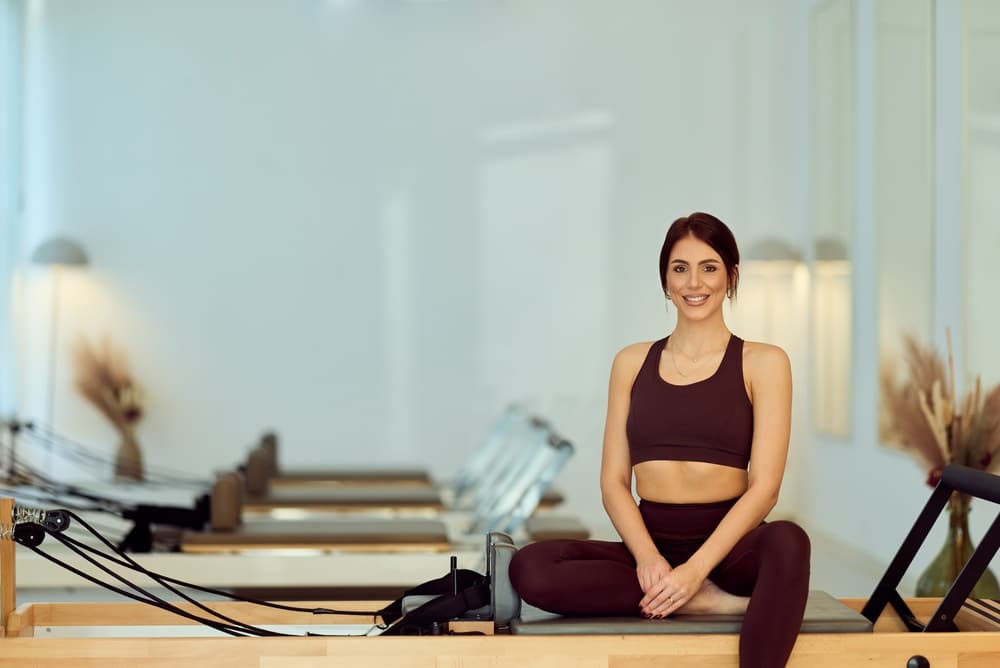
If you find that sitting cross-legged causes your knees to flare upward rather than resting comfortably toward the floor, your body is providing essential feedback regarding your hip health. This common physical limitation often signals restricted mobility, which can impact your comfort during daily activities, meditation, or floor-based hobbies. Fortunately, incorporating specific Pilates techniques can help restore the functional range of motion needed to sit with ease.
Many traditional practices, including yoga and various forms of mindfulness, rely on the ability to sit in a cross-legged position. Beyond formal exercise, this posture is a staple for social gatherings like picnics or simply relaxing on the floor. When this movement becomes difficult, it is frequently a sign of hip stiffness that has developed gradually over time, often going unnoticed until the restriction becomes significant.
Understanding the Difficulty of Sitting Cross-Legged in Adulthood
Difficulty with floor sitting is an increasingly prevalent issue among adults, yet it is often incorrectly attributed solely to the aging process. While physiological changes occur over time, the loss of mobility is more frequently linked to lifestyle habits than biological age. For individuals who spend several hours a day at a desk, the body begins to lose the specialized range of motion required for certain postures.
Sitting cross-legged requires a high degree of external hip rotation—a movement that is rarely utilized in modern daily life. Most routine actions, such as walking, standing, or sitting in a chair, occur in a linear plane. Because the muscles and joints are not regularly challenged to rotate outward, the body eventually de-prioritizes that flexibility. This “use it or lose it” principle means that the ability to sit cross-legged can vanish simply through lack of practice.
The Underlying Factors Behind Chronic Hip Stiffness
When faced with tight hips, many people turn exclusively to passive stretching or basic yoga poses. However, localized tightness is rarely just a flexibility issue. It is typically a complex combination of prolonged sedentary behavior, muscular weakness, and the loss of natural movement patterns. The body is highly adaptive; it optimizes its structure based on the positions you occupy most frequently.
Hours of sitting in a chair can lead to muscle imbalances where certain tissues become shortened while others become weak and inactive. Sitting cross-legged is a compound movement that requires the coordination of multiple muscle groups in the hips and pelvic floor. If there is a lack of strength or excessive tension in even one of these areas, the entire kinetic chain is affected, making the cross-legged position feel forced or painful.
Effective Pilates Techniques for Enhanced Hip Mobility
Pilates offers a comprehensive approach to hip health by combining targeted stretching with controlled strengthening. This dual focus helps to produce more sustainable results than stretching alone. By addressing the deep stabilizers of the pelvis, these movements can help unlock the hips and improve overall functional movement as you age.
1. Supine Knee Drops
This foundational movement serves as a gentle warm-up for the hip joints. It is designed to soothe the nervous system and signal to the body that it is safe to move into a deeper range of motion. By moving slowly, you can identify areas of tension without placing undue stress on the joints.
To perform this, lie on your back with your feet flat on the floor and knees bent, positioned about hip-width apart. Keep your shoulder blades firmly grounded as you slowly allow both knees to tilt toward one side. Use your core to bring them back to the center before lowering them to the opposite side. Synchronize this movement with deep, rhythmic breathing to maximize relaxation in the pelvic region.
2. The Mermaid
Once the joints are warmed up, the Mermaid exercise helps address the various layers of restriction in the hips and sides of the body. This move is particularly effective because it integrates hip rotation with a lateral stretch of the obliques, encouraging a full range of motion through the torso and pelvis.
Begin in a “Z-sit” or 90/90 position, where one shin is parallel in front of you and the other leg is bent with the foot pointing behind you. Reach your arms out to the sides at shoulder height. Lean your torso toward the side of your front leg, placing your forearm on the mat for support, and reach the opposite arm over your head. Hold the stretch briefly, feeling the length through your side and hip, then repeat the sequence on the other side.
3. Runner’s Lunge
The hip flexors often become chronically tight due to prolonged sitting, which directly inhibits the ability to sit cross-legged. The runner’s lunge is a dynamic stretch that targets the front of the hip and the quadriceps, helping to neutralize the effects of a desk-bound lifestyle.
Start in a high plank position with your hands directly under your shoulders. Step your right foot forward, placing it on the outside of your right hand. Keep your back leg active as you gently lower your hips toward the floor and lift your chest to create a long line from your head to your back heel. After holding the position, return to the plank and switch sides.
4. Figure Four Stretch
This exercise specifically targets the gluteal muscles and the deep external rotators of the hip. These are the primary muscles responsible for the rotation needed to bring your knees closer to the floor when sitting cross-legged.
Lie on your back with knees bent and feet on the floor. Cross your right ankle over your left thigh, just above the knee. Flex your feet to protect your joints, and gently push your right knee away from your body. To intensify the stretch, lift your left foot off the ground and pull your legs toward your chest, feeling the release in the outer hip of the crossed leg.
5. The Clamshell
While flexibility is necessary for mobility, strength is required to maintain it. The clamshell is a classic Pilates move that strengthens the hip abductors and rotators, providing the structural support necessary for healthy hip function.
Lie on your side with your knees bent at a 90-degree angle and your hips stacked. Keeping your heels touching, slowly lift your top knee toward the ceiling as far as you can without letting your pelvis tilt backward. Lower the leg back down with control. Complete approximately 15 repetitions before switching to the other side to ensure balanced muscular development.
Summary: Achieving Lasting Mobility Through Consistency
Tightness in the hips is a common physical challenge, but it does not have to be a permanent one. By consistently practicing these five Pilates-based movements, you can effectively reverse the restrictions caused by a sedentary lifestyle. These exercises prioritize both the flexibility to open the joints and the strength to stabilize them, providing a holistic solution for improved range of motion.
Consistency is more important than the duration of your sessions. Committing to just 10 minutes of these movements daily can lead to significant improvements in how your body feels and moves. Over time, these small adjustments will enhance your functional mobility, eventually allowing you to sit cross-legged with comfort and ease.