



















I discuss a public health case for modernizing the definition of protein quality.
In 2019, Dr. David Katz and colleagues, including one of my favorite researchers, David Jenkins, published a “public health case for modernizing the definition of protein quality.” The prevailing definition seems to have more to do with biochemistry than the overall effects on human health. The common belief that protein is “good,” and the more the better, combined with a definition of protein quality that favors animal protein, gives the impression that eating more meat, eggs, and dairy is desirable and preferable. But this is directly opposed to nutrition guidelines that are instead trying to push more plants. Although protein malnutrition is still common in many areas of the world, it is extremely rare in the industrialized world, where “the most formidable public health threats…are from chronic diseases,” not something like kwashiorkor, severe protein and calorie malnutrition.
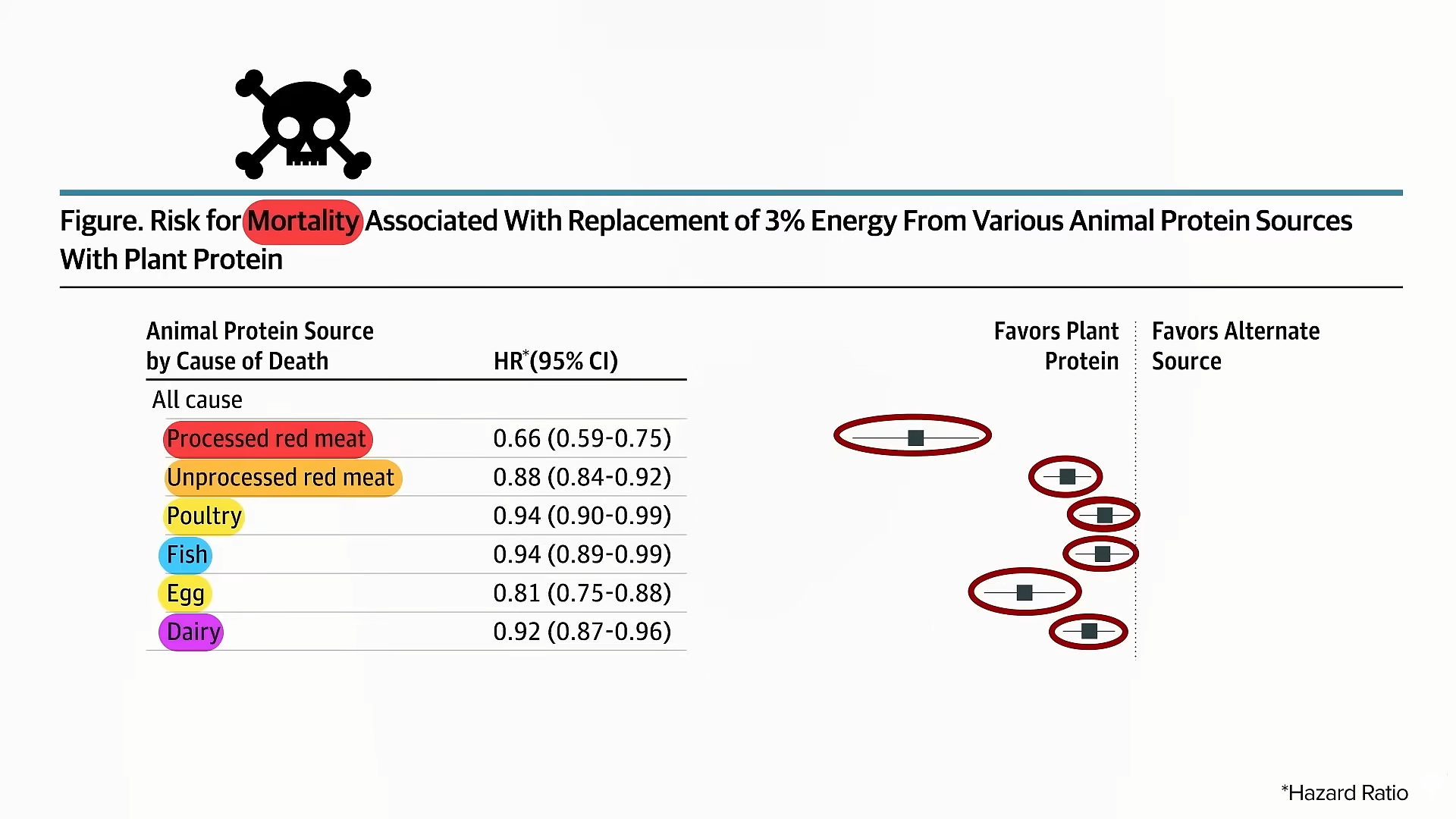
In 2016, a landmark study was published out of Harvard, involving more than 100,000 people, that found that replacing animal protein with plant protein was associated with lower risk of dying prematurely. The worst offenders seemed to be processed meat like bacon, as well as egg protein (the egg whites). But swapping in even just 3% plant protein for any of the animal proteins, such as processed meat, unprocessed meat, chicken, fish, eggs, or dairy, was associated with a significantly lower risk of arguably the most important endpoint of all: death. See below and at 1:32 in my video Animal Protein vs. Plant-Based Protein.
But how do we know it’s the protein? The researchers adjusted for factors such as saturated fat intake, which suggested it wasn’t just the animal fat. But how can our body differentiate between protein from a plant and protein from an animal? Isn’t protein…protein? No. Generally, plant protein is low in branched-chain amino acids, unlike animal protein, and decreased consumption of branched-chain amino acids improves metabolic health. It could be the IGF-1, a cancer-promoting growth hormone that is boosted by so-called high-quality animal protein intake, though. We suspect the IGF-1 connection is cause and effect, since people born with higher IGF-1 levels, regardless of what they eat, appear to suffer higher rates of killers like type 2 diabetes and heart disease. Or, it could be something the Harvard researchers didn’t control for, such as toxic pollutants like dioxins and polychlorinated biphenyls (PCBs), since they tend to accumulate up the food chain into cattle, pigs, chickens, and fish and therefore end up on our plates. So, “plant-based protein, besides other health benefits, stands as an important step to lower the body burden of harmful pollutants of dietary animal-protein origin.”
If you don’t think a study with 100,000 people is enough, how about 400,000 people? The U.S. National Institutes of Health–AARP Diet and Health Study is the largest diet cohort study in history, and, again, researchers found that simply replacing 3% of calories from animal protein with plant protein was associated with a 10% lower overall mortality—and you get even twice that benefit if you get rid of eggs, too. That’s not a surprise, since egg consumption is associated with a higher risk of developing cardiovascular disease.
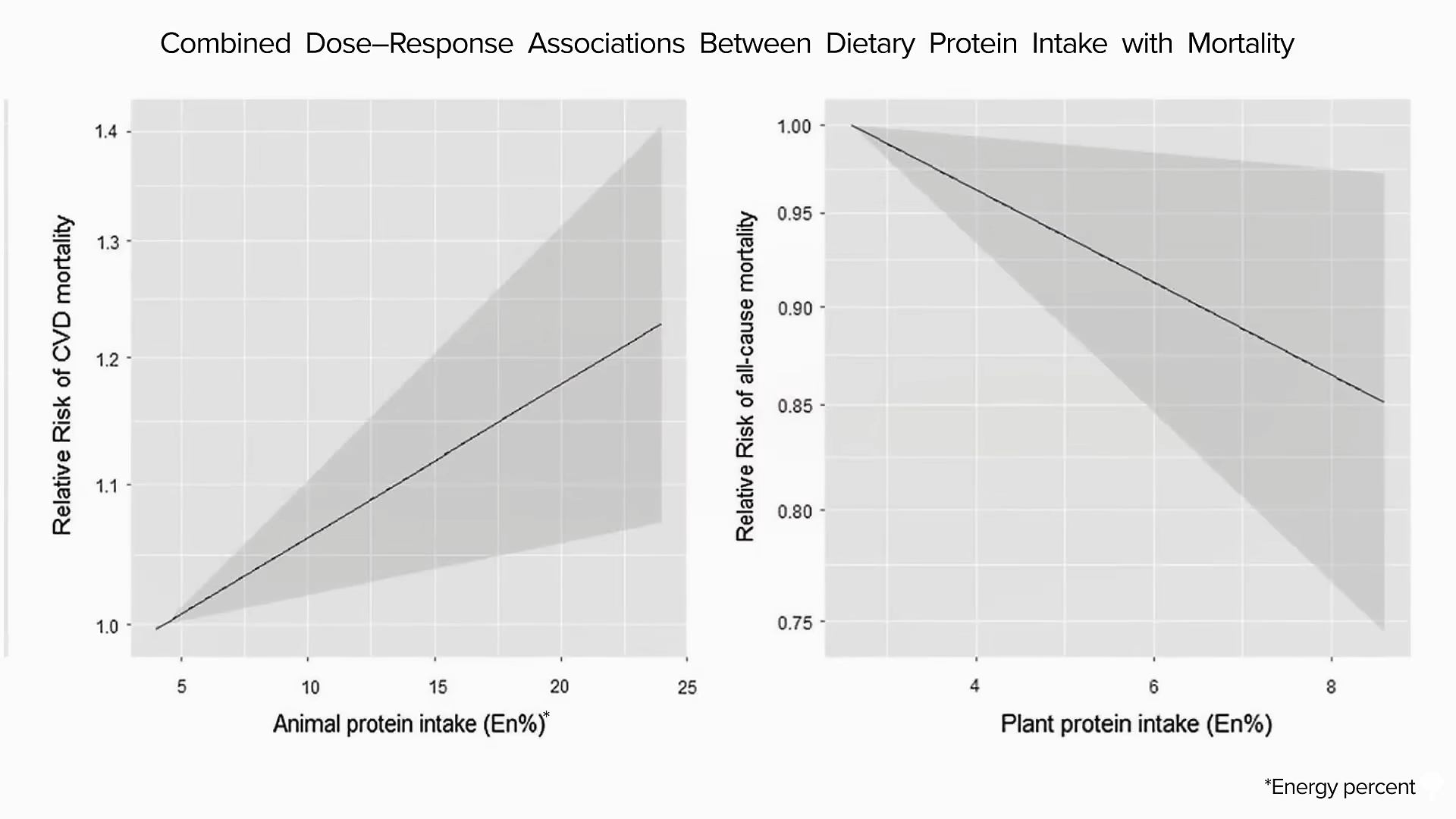
Put all the studies together on dietary protein intake and mortality, and people who eat more protein tend to live shorter lives. But this is “mainly driven by a harmful association of animal protein.” Plant protein intake is actually inversely associated with mortality, meaning those who eat more plant protein tend to live longer lives. More animal protein may mean more mortality, whereas more plant protein is correlated with less mortality, as you can see below and at 3:30 in my video.
So, the best of both worlds would be to increase the intake of plant protein instead of animal protein. In other words, as another meta-analysis concluded, “Persons should be encouraged to increase their plant protein intake to potentially decrease their risk of death.”