


















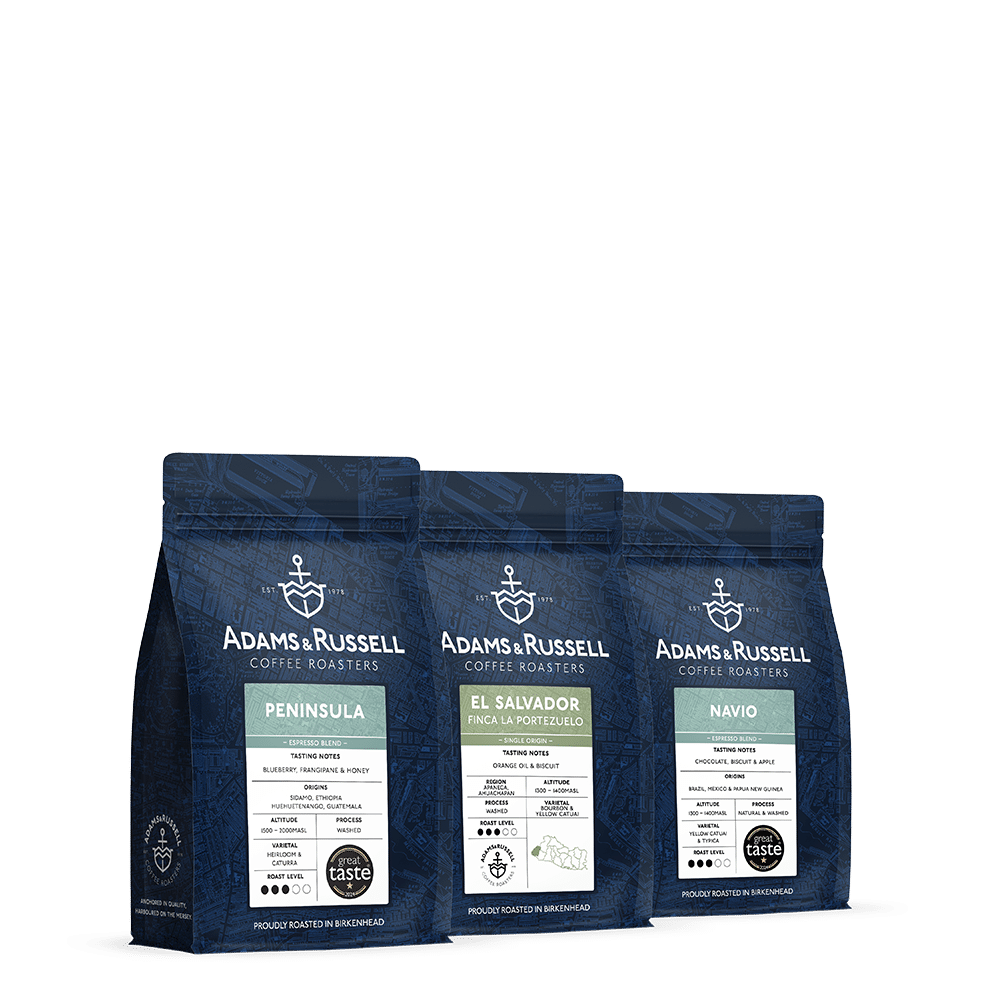
Embracing sustainability in coffee transcends the simple act of recycling pods. During a recent visit to Adams & Russell Coffee Roasters in Birkenhead, I learned about their eco-friendly practices and gained insights into how home baristas can adopt similar habits.
Unique Aspects of Adams & Russell’s Sustainable Roasting
Adams & Russell:
“As specialty roasters, we prioritize high-grade, traceable Arabica beans from across the globe, roasting them in small batches to ensure peak flavor and freshness.
Our artisan method allows us to tailor the roast for each type of bean, ensuring they aren’t just fresh, but also optimized for taste.”
The Importance of Fairtrade and Organic Coffees
Adams & Russell:
“Fairtrade certification safeguards farmers by guaranteeing a minimum price, shielding them from market fluctuations. It also promotes environmental practices like maintaining soil and water quality while avoiding chemical use and supporting biodiversity.”
“We offer products such as the ANEI organic Colombian single-origin coffee, cultivated by agroecological producers who work in harmony with nature, as well as bundles from women’s cooperatives dedicated to fostering sustainable communities.”
Packaging Innovations to Reduce Plastic Waste
Adams & Russell:
“We are transitioning to fully recyclable or compostable packaging. Customers have the option to refill their containers in-store. By purchasing in bulk, they reduce packaging waste while enjoying fresher coffee.”
Bringing Sustainability into Your Home Brewing
Adams & Russell:
“Start by choosing your brewing device wisely—consider a French press, AeroPress, V60, or Chemex, all of which eliminate the need for single-use pods.
Opt for unbleached, compostable paper filters or reusable stainless-steel options. Buying whole beans and grinding them just prior to brewing enhances freshness and minimizes waste.”
Reusing Spent Grounds and Chaff
Adams & Russell:
“Used coffee grounds are a great nitrogen source, perfect for compost or garden mulch, and they can naturally deter slugs,” they explain. Moreover, utilizing coffee chaff—the papery husk from roasting—can yield significant savings.
We collect chaff through our Vortx filtered roaster system. Customers can take it home to use in compost or as mulch.
This illustrates a straightforward yet impactful example of a circular economy in practice.”
Recommended Sustainable Coffee Tools
Adams & Russell:
“We advocate for the Circular & Co reusable cup, crafted in the UK from recycled paper cups, designed for a lifespan of ten years and fully recyclable at end of life.
Additionally, we offer stainless steel filters, V60s, grinders, and other essentials. Investing in quality tools leads to longevity and reduces the frequency of replacements.”
Addressing Energy Consumption
Adams & Russell:
“Only boil the water you need, power down your machine after use, and consider cold brewing. Creating larger batches and storing them in the refrigerator can prevent the need for repeated heating.
Using manual brewers eliminates electricity use, and hand grinding beans further contributes to energy savings.”
Sustainable Alternatives for Milk and Sweeteners
Adams & Russell:
“For milk, choose plant-based options in returnable glass or recyclable packaging. Instead of individual sugar packets, use bulk sugar jars or try making your own syrups.
We offer simple flavors from sugar-free Sweetbird syrups—just 1-2 tbsp per drink goes a long way.”
Fun DIY Coffee Projects
Adams & Russell:
“Absolutely.
You can create body scrubs with grounds and coconut oil, use dried grounds to deodorize fridges, or sprinkle chaff and leftover grounds around acid-loving plants.
Consider making coffee-scented candles by mixing melted wax and chaff.”
Final Thoughts from Adams & Russell
“Our goal is clear: close the loop on waste, support farmers, and enable coffee enthusiasts to savor their coffee with intention,”
Their model—from direct trade sourcing to recyclable packaging, chaff recycling, and reusable tools—serves as a guide for any coffee lover aiming to reduce their environmental footprint.
By adopting strategies such as bulk buying, waste reuse, and practical brewing methods, your daily coffee ritual can become a low-impact experience. As Adams & Russell emphasize, progress matters more than perfection. In the realm of coffee, every small adjustment can lead to a significant impact.