



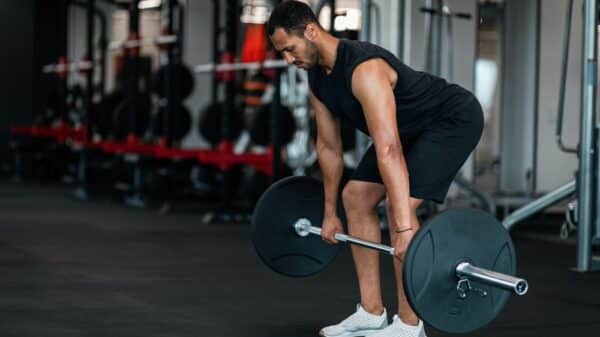
















A push-style training session is designed to target the major muscle groups responsible for pushing movements: the chest, shoulders, and triceps. By grouping these muscles together, you can maximize recovery time for the opposing “pull” muscles and ensure each muscle group receives adequate stimulus.
In the following guide, we explore four distinct variations of push day routines to suit your equipment availability and training goals:
- A comprehensive, high-performance push routine
- A dedicated machine-based circuit
- A dumbbell-only home or gym workout
- A hybrid push-and-pull combination
Each program outlines specific sets, repetitions, and recovery intervals. Detailed execution instructions for every movement are provided in the exercise breakdown section below.
High-Performance Push Day Program
Barbell Bench Press: 3 sets | 4–6 reps | 2–3 min rest
Incline Dumbbell Press: 3 sets | 6–8 reps | 2–3 min rest
Cable Lateral Raise: 3 sets | 8–10 reps | 2–3 min rest
Dumbbell Overhead Triceps Extension: 2 sets | 8–10 reps | 2–3 min rest
| Workout Metrics | Total Volume |
|---|---|
| Sets | 11 |
| Repetition Count | 70–92 |
| Estimated Effective Reps | ~44 |
| Session Duration | 25–40 min |
Note: An “effective rep” refers to the final repetitions in a set performed near the point of muscular failure. These are the most critical for growth because they require the activation of all available muscle fibers.
This routine utilizes two different pressing angles to ensure full pectoral development while engaging the anterior deltoids and triceps. Lateral raises prioritize the width of the shoulders (side delts), and the overhead extensions isolate the triceps through a deep stretch.
Resistance Machine Push Session
Machine Chest Press: 3 sets | 6–8 reps | 2–3 min rest
Pec Deck Fly: 3 sets | 8–10 reps | 2–3 min rest
Cable Lateral Raise: 3 sets | 8–10 reps | 2–3 min rest
Cable Triceps Pushdown: 3 sets | 8–10 reps | 2–3 min rest
| Workout Metrics | Total Volume |
|---|---|
| Sets | 12 |
| Repetition Count | 90–114 |
| Estimated Effective Reps | ~48 |
| Session Duration | 30–45 min |
Focusing on machines provides greater stability, allowing you to drive the chest muscles to failure without being limited by balance. The inclusion of the pec deck is particularly effective for isolating the pectoral muscles, as it removes the triceps from the movement entirely.
Dumbbell-Only Home Push Routine
Flat Dumbbell Bench Press: 3 sets | 6–8 reps | 2–3 min rest
Incline Dumbbell Bench Press: 3 sets | 8–10 reps | 2–3 min rest
Standing Dumbbell Lateral Raise: 3 sets | 8–10 reps | 2–3 min rest
Dumbbell Overhead Extension: 3 sets | 8–10 reps | 2–3 min rest
| Workout Metrics | Total Volume |
|---|---|
| Sets | 12 |
| Repetition Count | 90–114 |
| Estimated Effective Reps | ~48 |
| Session Duration | 30–45 min |
This minimalist approach is perfect for home workouts, requiring only a pair of dumbbells and an adjustable bench to hit all the primary “push” muscle groups effectively.
Integrated Push and Pull Method
Incline Dumbbell Bench Press: 3 sets | 6–8 reps | 2–3 min rest
Seated Machine Row: 3 sets | 6–8 reps | 2–3 min rest
Machine Chest Press: 3 sets | 6–8 reps | 2–3 min rest
Lat Pulldown: 3 sets | 6–8 reps | 2–3 min rest
Cable Lateral Raise: 3 sets | 8–10 reps | 2–3 min rest
| Workout Metrics | Total Volume |
|---|---|
| Sets | 15 |
| Repetition Count | 96–126 |
| Estimated Effective Reps | ~60 |
| Session Duration | 35–55 min |
Training opposing muscle groups in a single session is a time-efficient strategy. While your chest and shoulders recover after a set, you can perform a pulling movement for your back or biceps. This allows you to maintain high intensity and volume without extending the duration of your workout.
Five Strategies for Better Results
- Implement Double Progression: Start with a weight that allows you to hit the lower end of the rep range. Once you can reach the upper rep limit for your first set with good form, increase the resistance in your next session.
- Prioritize Rest: Research indicates that resting for 2–3 minutes between challenging sets is superior for building both strength and muscle mass compared to shorter rest periods.
- Train Close to—But Not At—Failure: Aim to stop your sets about 1 or 2 repetitions before your form breaks down. This provides enough stimulus for growth while preventing excessive central nervous system fatigue.
- Be Flexible with Equipment: If a specific machine is occupied or an exercise feels uncomfortable on your joints, swap it for a similar movement that targets the same muscle groups.
- Use a Structured Warm-Up: Prepare your joints by performing two lighter sets before your main working weight. Use roughly 50% of your target weight for 5 reps, followed by 80% for another 5 reps.
The Best Exercises for a Stronger Push Session
1. Traditional Barbell Bench Press
Instructions:
- Position yourself on the bench with your eyes aligned under the bar. Retract your shoulder blades and grip the bar slightly wider than your shoulders.
- Firmly plant your feet and create a slight arch in your back. Unrack the barbell and hold it directly above your chest.
- Lower the weight under control until it lightly touches your mid-chest.
- Drive the bar upward until your arms are fully extended.
- Ensure the bar is safely secured in the hooks after completing your final rep.
Volume: 3 sets | 4–6 reps | 2–3 minutes rest
Benefits: This is a foundational compound lift that allows for maximum load, stimulating the chest, front shoulders, and triceps simultaneously.
Training Tip: If you find your shoulders taking over, focus on “pinning” your shoulder blades together throughout the entire movement to keep the tension on the chest.
2. Flat Dumbbell Press
Instructions:
- Sit on a bench with dumbbells on your thighs. Use your knees to help kick the weights into position as you lie back.
- With shoulder blades retracted, press the weights toward the ceiling until your elbows lock.
- Lower the dumbbells to the sides of your chest, maintaining control at the bottom.
- Press back to the start. When finished, bring your knees up to meet the weights to safely sit back up.
Volume: 3 sets | 6–8 reps | 2–3 minutes rest
Benefits: Dumbbells offer a greater range of motion and allow for a more natural wrist position, which can be easier on the joints than a fixed barbell.
Training Tip: Use slightly higher rep ranges with dumbbells, as the added stability requirement makes very heavy, low-rep sets more difficult to coordinate.
3. Incline Barbell Bench Press
Instructions:
- Set your bench to a 30-degree incline. Grip the bar slightly wider than shoulder-width.
- Keep your feet planted and back arched slightly. Unrack the bar and bring it over your upper chest.
- Lower the bar to your collarbone area, keeping your elbows tucked at roughly a 45-degree angle from your torso.
- Press the bar back up to the starting position.
Volume: 3 sets | 6–8 reps | 2–3 minutes rest
Benefits: This variation shifts the emphasis toward the clavicular head of the pectorals, commonly known as the “upper chest.”
Training Tip: Check your forearm angle at the bottom of the rep; they should be vertical. Adjust your grip width until you achieve this alignment.
4. Seated Machine Chest Press
Instructions:
- Adjust the seat height so the handles align with the middle of your chest.
- Keep your back and head firmly against the pad and your shoulder blades retracted.
- Push the handles forward until your arms are straight.
- Slowly return to the start, feeling a stretch in the pecs.
Volume: 3 sets | 6–8 reps | 2–3 minutes rest
Benefits: The machine provides a fixed path, making it a safe choice for pushing your muscles to their limit without a spotter.
Training Tip: Avoid letting your shoulders “roll” forward at the end of the press. Keep your upper back glued to the machine to isolate the chest.
5. Incline Dumbbell Bench Press
Instructions:
- Set a bench to a 30-degree angle. Kick the dumbbells up to shoulder height while lying back.
- Press the weights vertically while keeping your feet stable on the floor.
- Lower the weights until the handles are level with your chest, then repeat.
Volume: 3 sets | 6–8 reps | 2–3 minutes rest
Benefits: This combines the upper-chest focus of the incline angle with the freedom of movement provided by dumbbells.
Training Tip: Ensure the dumbbells move in a symmetrical path. Imbalance during the movement wastes energy and reduces the effectiveness of the exercise.
6. Standing Military Press (Barbell)
Instructions:
- Set a barbell at chest height. Grip it just outside shoulder width with palms facing forward.
- Unrack the bar, take a small step back, and tighten your core and glutes.
- Press the bar toward the ceiling. Move your head slightly back as the bar passes your face.
- Once the bar is overhead, “push your head through” the space created by your arms to lock out the weight.
Volume: 3 sets | 6–8 reps | 2–3 minutes rest
Benefits: This is the ultimate builder for the anterior deltoids and also requires significant core stability.
Training Tip: Think about driving your chest forward the moment the bar clears your forehead to achieve a stronger lockout position.
7. Single-Arm Cable Lateral Raise
Instructions:
- Set the cable pulley to the lowest setting and attach a single handle.
- Standing sideways to the machine, grab the handle with the far hand.
- With a slight forward lean, raise your arm out to the side in a wide arc until it is parallel to the ground.
- Control the weight back down to the starting point.
Volume: 3 sets | 8–10 reps | 2–3 minutes rest
Benefits: Unlike dumbbells, cables provide constant tension on the side deltoids throughout the entire range of motion.
Training Tip: Focus on leading with your elbow rather than your hand to ensure the side delt is doing the work instead of the traps.
8. Standing Dumbbell Lateral Raise
Instructions:
- Hold a dumbbell in each hand at your sides. Lean forward very slightly at the hips.
- Raise the weights out to your sides with a slight bend in the elbows.
- Stop when your arms are parallel to the floor, then lower them slowly.
Volume: 3 sets | 8–10 reps | 2–3 minutes rest
Benefits: This is a highly effective isolation movement for widening the shoulders that requires very little setup.
Training Tip: Stop the dumbbells a few inches before they touch your legs at the bottom. This maintains “time under tension” on the muscle.
9. Two-Handed Overhead Triceps Extension
Instructions:
- Sit on a bench and hold one end of a dumbbell with both hands. Lift it directly overhead.
- Lower the weight behind your head by bending only at the elbows.
- Extend your arms back to the ceiling, focusing on the contraction in the triceps.
Volume: 2 sets | 8–10 reps | 2–3 minutes rest
Benefits: Training the triceps in an overhead position emphasizes the long head of the muscle, which is essential for overall arm thickness.
Training Tip: Keep your upper arms stationary and vertical. Only your forearms should move to ensure the triceps are properly stretched.
10. Close-Grip Barbell Press
Instructions:
- Lie on a flat bench and grip the bar with hands at shoulder width or slightly closer.
- Lower the bar to the lower part of your chest, keeping your elbows tucked close to your ribs.
- Press the bar back up forcefully.
Volume: 3 sets | 4–6 reps | 2–3 minutes rest
Benefits: This allows you to overload the triceps with significant weight while still involving the chest and shoulders.
Training Tip: Do not use an extremely narrow grip (where hands touch), as this can cause wrist strain without providing any extra benefit to the triceps.
Summary of Push Training Principles
Mastering the push day routine requires a balance between heavy compound pressing and targeted isolation work. By rotating between these four workout variations, you can prevent plateaus and ensure that the chest, shoulders, and triceps are developed proportionally. Remember that consistency and progressive overload—gradually increasing weight or reps—are the primary drivers of muscle growth. Always prioritize proper form over the amount of weight on the bar to ensure long-term joint health and optimal muscle activation.