













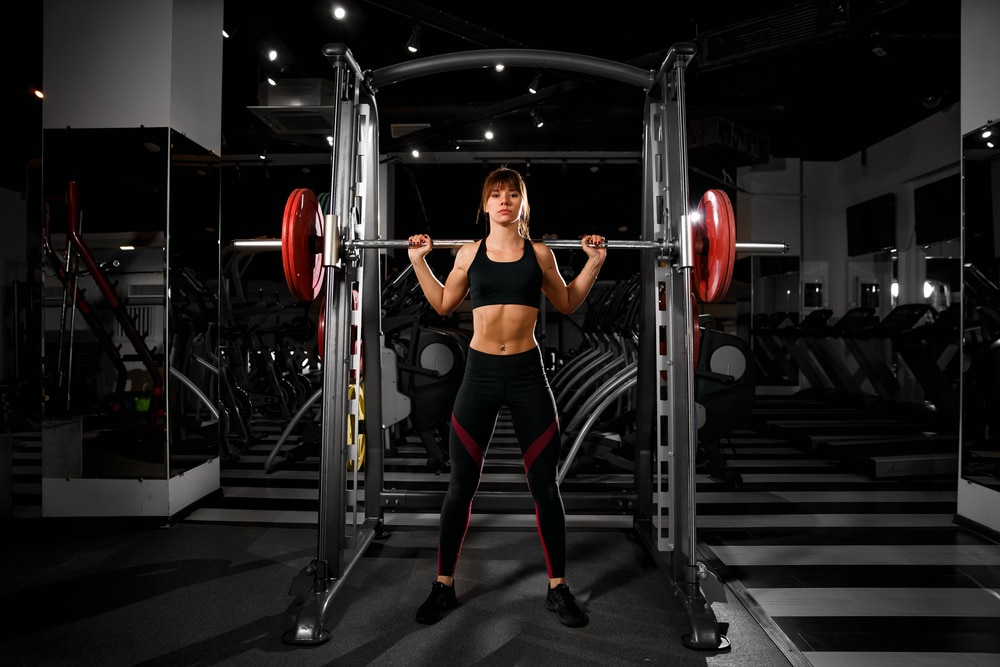
Developing powerful, well-defined legs requires a disciplined approach based on three foundational principles. First, focus on a select group of high-impact exercises performed with meticulous form to target the quadriceps, hamstrings, glutes, adductors, and calves. Second, ensure high intensity by performing most sets near the point of muscular failure while consistently increasing the resistance over time. Finally, aim for moderate volume, typically 6–10 repetitions per set, completing 5–6 high-effort sets per muscle group each week.
Adhering to these guidelines will trigger significant strength gains and muscle hypertrophy. For women concerned that heavy lifting might lead to an overly bulky appearance, it is important to understand that hormonal differences make it nearly impossible to achieve a bodybuilder-like physique without specific pharmacological assistance. Instead, this type of training results in a firm, athletic, and “toned” look.
A Comprehensive Lower Body Program for Maximum Strength
Barbell Back Squat: 3 sets | 6–8 reps | 2–3 min rest
Barbell Romanian Deadlift: 3 sets | 6–8 reps | 2–3 min rest
Leg Extension: 3 sets | 6–8 reps | 2–3 min rest
Seated Leg Curl: 3 sets | 6–8 reps | 2–3 min rest
Leg Press Calf Raise: 4 sets | 10–15 reps | 2–3 min rest
| Total Work Sets | Repetition Range | High-Stimulus Reps | Estimated Time |
|---|---|---|---|
| 16 | 112–156 | ~64 | 40–55 minutes |
Perform this routine once weekly, ensuring each set is completed with roughly one repetition left in reserve (RIR). The session begins with the barbell back squat, a demanding compound movement that anchors the workout by engaging the quads, glutes, and adductors. Next, the Romanian deadlift shifts the focus to the posterior chain, specifically the hamstrings and glutes, while allowing the quads a brief recovery period. The workout concludes with isolation movements for the quads and hamstrings, followed by calf raises to ensure full lower-body development.
In this context, an “effective rep” refers to the final few repetitions of a set where muscular fibers are fully recruited. A “hard set” is one pushed close to the point of failure, excluding any light warm-up rounds.
Targeted Leg and Glute Routine for Shape and Definition
Barbell Back Squat: 3 sets | 6–8 reps | 2–3 min rest
Hip Thrust (Machine or Barbell): 3 sets | 6–8 reps | 2–3 min rest
Leg Extension: 3 sets | 6–8 reps | 2–3 min rest
Seated Leg Curl: 3 sets | 6–8 reps | 2–3 min rest
Hip Abduction Machine: 2 sets | 8–10 reps | 2–3 min rest
Leg Press Calf Raise: 2 sets | 10–15 reps | 2–3 min rest
| Total Work Sets | Repetition Range | High-Stimulus Reps | Estimated Time |
|---|---|---|---|
| 16 | 108–146 | ~64 | 40–55 minutes |
This variation prioritizes glute development by substituting the Romanian deadlift with the hip thrust. It also incorporates hip abduction to target the smaller muscles of the hip, such as the gluteus medius and piriformis, which contribute to a sculpted lower body. Calf volume is reduced here, as significant calf growth is often less of a priority for this demographic. However, the foundational strength principles remain the same.
Regarding the fear of becoming “bulky”: men typically possess significantly higher testosterone levels than women, which is the primary driver of massive muscle growth. Without that hormonal profile or performance-enhancing drugs, a woman’s legs will become lean and strong rather than excessively large.
The Ideal Resistance Machine Leg Workout
Hack Squat Machine: 3 sets | 6–8 reps | 2–3 min rest
Hip Thrust Machine: 3 sets | 6–8 reps | 2–3 min rest
Leg Extension: 3 sets | 6–8 reps | 2–3 min rest
Seated Leg Curl: 3 sets | 6–8 reps | 2–3 min rest
Leg Press Calf Raise: 4 sets | 10–15 reps | 2–3 min rest
| Total Work Sets | Repetition Range | High-Stimulus Reps | Estimated Time |
|---|---|---|---|
| 16 | 112–156 | ~64 | 40–55 minutes |
Free-weight movements like the squat can be technically difficult and taxing on the lower back. For those managing injuries or who prefer the stability of machines, this routine provides a comparable stimulus. The hack squat serves as an excellent alternative to the traditional squat, emphasizing knee and hip extension with fixed-path safety. If a hack squat is unavailable, the leg press or pendulum squat are effective substitutes.
Effective Lower Body Training with Dumbbells
Dumbbell Goblet Squat: 3 sets | 6–8 reps | 2–3 min rest
Dumbbell Romanian Deadlift: 3 sets | 6–8 reps | 2–3 min rest
Dumbbell Step-Up: 3 sets | 6–8 reps | 2–3 min rest
Nordic Hamstring Curl: 3 sets | 6–8+ reps | 2–3 min rest
Bodyweight Single-Leg Calf Raise: 4 sets | 10–15 reps | 2–3 min rest
| Total Work Sets | Repetition Range | High-Stimulus Reps | Estimated Time |
|---|---|---|---|
| 16 | 112–156+ | ~64 | 40–60 minutes |
When barbells and machines are unavailable, dumbbells can still provide a significant challenge. Goblet squats and step-ups effectively target the anterior chain, while dumbbell Romanian deadlifts and Nordic curls focus on the hamstrings. Single-leg calf raises ensure the lower legs are not neglected, utilizing body weight for high-repetition fatigue.
A High-Performance Bodyweight Leg Routine
Bodyweight Squat: 3 sets | 10–15 reps | 2–3 min rest
Bodyweight Step-Up: 3 sets | 8–10 reps | 2–3 min rest
Nordic Hamstring Curl: 3 sets | 6–8 reps | 2–3 min rest
Bodyweight Glute Bridge: 3 sets | 10–15 reps | 2–3 min rest
Bodyweight Single-Leg Calf Raise: 4 sets | 10–15 reps | 2–3 min rest
| Total Work Sets | Repetition Range | High-Stimulus Reps | Estimated Time |
|---|---|---|---|
| 16 | 142–204 | ~64 | 45–65 minutes |
While external resistance is generally superior for muscle growth, a well-structured bodyweight routine can maintain and build functional strength. This program uses squats, step-ups, and glute bridges to cover the major muscle groups, with Nordic curls providing a high-intensity stimulus for the hamstrings.
Top Strategies for Enhancing Your Leg Workouts
- Implement Double Progression: Once you can comfortably reach the top of a repetition range for a set, increase the weight in the following session. For bodyweight movements, increase the reps or choose a more difficult variation to ensure continued progress.
- Prioritize Rest: Allow 2–3 minutes between sets. This recovery period is essential for replenishing ATP and maintaining technical proficiency in subsequent sets.
- Train Close to Failure: Effort is the primary driver of growth. Aim to finish each set when you feel you could only complete 1–2 more reps with perfect form.
- Focus on Technical Precision: Muscle stimulation is more important than the number on the plates. Use a weight you can control through a full range of motion to maximize results and minimize injury risks.
- Adjust Exercises Based on Equipment: If a specific machine is occupied or an exercise causes joint discomfort, swap it for a similar movement that targets the same muscle groups.
- Perform a Dynamic Warm-Up: Before lifting heavy, perform several lighter sets of your first exercise (e.g., 5 reps at 50% load, then 5 reps at 70% load) to prepare your nervous system and joints.
- Manage Fatigue: Leg training is metabolically and physically demanding. Ensure you are well-rested before your session and avoid doing high-intensity cardio immediately before your leg workout.
Technical Guidance for the 5 Primary Leg Exercises
1. The Barbell Back Squat
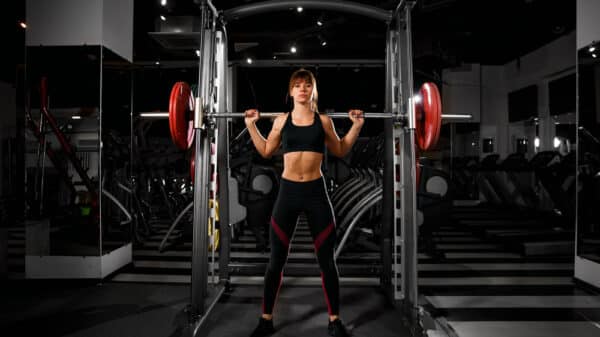
This is the gold standard for lower-body development. Set the bar at mid-chest height. Grip the bar slightly wider than shoulder-width and position it across your upper trapezius. Step back, set your feet shoulder-width apart with toes slightly flared. Descend by pushing your hips back and bending your knees until your thighs are parallel to the floor. Drive upward through your mid-foot to return to the start.
Pro Tip: To keep your knees stable, imagine trying to “tear the floor apart” with your feet as you ascend; this engages the hips and prevents the knees from caving inward.
2. The Leg Extension
Adjust the machine so your knees align with the pivot point. With your shins against the pad, extend your legs fully. This exercise is unique because it targets the rectus femoris more effectively than many compound lifts.
Pro Tip: Pause at the peak of the contraction for a half-second to maximize muscle fiber recruitment in the quadriceps.
3. The Barbell Romanian Deadlift
Hold the bar at mid-thigh with a flat back. Lower the weight by pushing your hips as far back as possible while keeping the bar close to your legs. Once you feel a significant stretch in your hamstrings, return to a standing position by driving your hips forward.
Pro Tip: Keep your lats engaged by imagining you are squeezing oranges in your armpits. This prevents the bar from drifting away and protects your lower back.
4. The Seated Leg Curl
Position yourself so the heel pad sits on your Achilles tendon and the thigh pad is secure. Pull your heels toward your glutes as far as the machine allows, then return slowly.
Pro Tip: Keep your toes pulled toward your shins throughout the movement (dorsiflexion). This can help improve hamstring activation for many lifters.
5. The Leg Press Calf Raise
Place the balls of your feet on the bottom of the leg press platform with your heels hanging off. Push the platform away to release the safety, then lower your heels to feel a stretch. Forcefully extend your ankles to lift the weight back up.
Pro Tip: Pause for two seconds at the bottom of the stretch. This eliminates the “bounce” from the Achilles tendon and forces the calf muscles to do the heavy lifting.
Summary of Key Takeaways
Building strong, muscular legs is not about complexity, but about consistency and intensity. By focusing on a few high-quality compound and isolation movements, respecting the principles of progressive overload, and allowing for adequate recovery, anyone can transform their lower body. Whether you are using a full commercial gym or training at home with body weight, the secret lies in the quality of your repetitions and the gradual increase of the challenge over time. Stay focused on your form, track your progress, and ensure your effort levels remain high for the best results.